Mine Storage International welcomes new CEO to lead the next phase of growth and project development
Mine Storage International, a Swedish project developer of resilient energy storage infrastructure, announces the appointment of Fredrik Olrog as
The Swedish grid operator Svenska Kraftnät has proposed that energy storage providers get a separate customer category. This is a step in the right direction. Treating storage as both load and generation creates distorted cost signals and unnecessary regulatory risk. A dedicated category would allow the value of grid storage — balancing, congestion relief and system stability — to be priced correctly. This is not about subsidies, it is about accurate system economics. When flexibiltiy is priced properly, long-duration energy storage becomes investable, scalable and bankable, exactly what the power system needs as it transitions from energy scarcity to system scarcity. More on LinkedIn
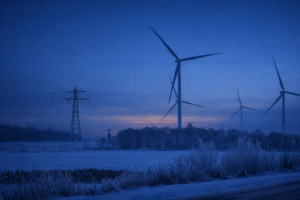
Today, almost a third of global CO2 emissions come from fossil-based electricity production. The switch to renewables is underway, but many renewable sources are intermittent:
Winds come to a halt; the sun sets or is obscured by cloud cover.
Meanwhile, overall global energy requirements are surging. The electrification of the transport sector and other industries will require us to increase energy production by 60% over the next 15 years compared to today, which will entail a massive increase in the use of renewables.
By 2040, renewable energy demand will rise sevenfold from today’s levels, according to some estimates.
If we are to have a functional energy system in the future, we need a massive increase in energy storage.
The Mine Storage solution
Mine Storage uses two elements to store electrical energy — water and gravity. Different types of mines can fit the bill. We provide a closed-loop solution using proven pumped hydro-power technology in an underground setting. Open-pit mines could also be converted if there is a sufficient altitude difference between two excavated sites.
Today, only 3% of all generated power is stored, and traditional pumped hydro storage accounts for more than 90 % of the stored power. As much as $660 billion will be invested in energy storage by 2040, according to BloombergNEF.
Clean, proven Energy storage technology
Energy storage systems have often been associated with negative environmental impacts, or lack of maturity. Mine Storage is environmentally sound and its core technology, pumped hydroelectric storage, has been around for over a century.
The Climate Challenge Is Underway
Energy distribution is going through historic changes. Electrification is bolstering the shift from fossil-based energy production to renewables, a combination that could result in a 90% reduction in CO2 emissions by 2050.
Flexible, grid-scale energy storage that underpins a zero-carbon grid
Mine Storage plans systems with grid-scale storage capacity that will be able to discharge energy for 2-12 hours. Sizes will vary from 15-200 MW up to 30-2400 MWh.
Mine Storage facilities will be mostly underground -- they won’t be seen or heard. The clearest indicator of the existence of a mine storage will be that the water level in the upper water reservoir varies slightly.
Mine Storage International, a Swedish project developer of resilient energy storage infrastructure, announces the appointment of Fredrik Olrog as

Mine Storage has appointed Christian Eldheden as project manager for its flagship mine storage project in Norberg, a pioneering
Mine Storage, a Swedish project developer of resilient energy storage infrastructure, has secured new financing through a directed rights
There are roughly a million closed mines registered in the global database mindat.org. All of them are not suitable for mine storages, but the availability of mines is not a limitation. On the contrary, they have significant global spread, and we also see opportunity for the use of mines still in operation.
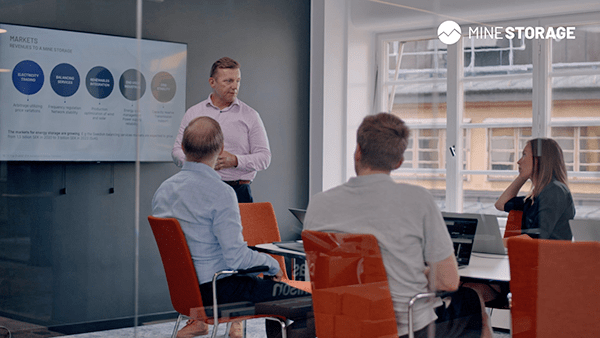
Mine storage is like a Swiss Army Knife for power grids. It can generate returns in various markets, for example electricity trade arbitrage and/or ancillary services such as grid frequency control. Fast-response, grid-scale energy storage is becoming increasingly important to future-proofing energy systems, given that demand for energy and the share of intermittent renewable energy production keeps growing.